
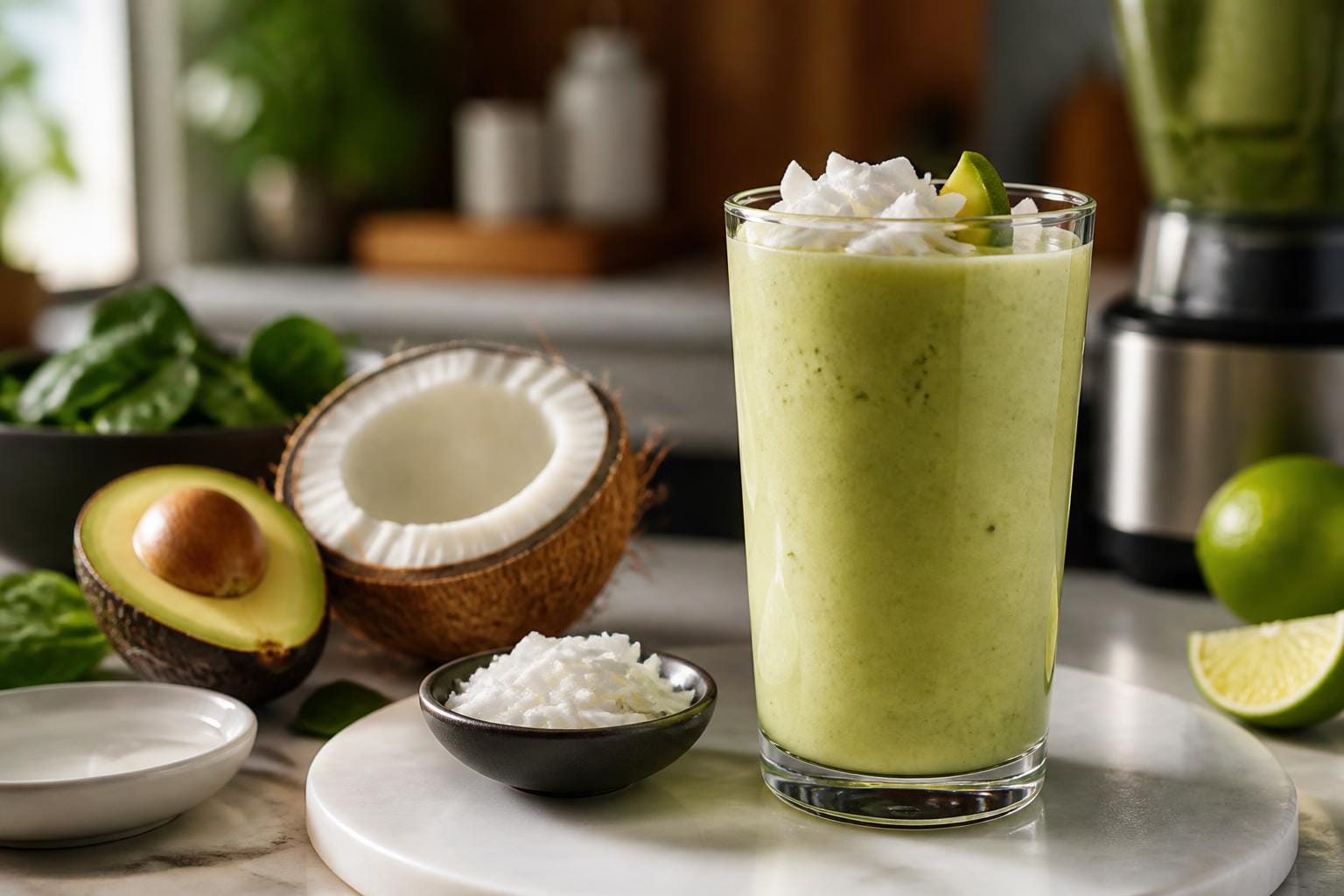
How Coconut Milk Affects the Texture and Creaminess of Keto Smoothies
📝 Disclaimer: The content and recipes on this site are for informational and educational purposes only and do not constitute medical or professional nutrition advice. Always consult with a qualified healthcare provider before making significant changes to your diet, especially if you have food allergies or pre-existing health conditions.
* This post may contain affiliate links. We may earn a commission from qualifying purchases made through these links at no extra cost to you.
* This site uses AI technology for content assistance and illustrative imagery. Images are for demonstration purposes and do not depict real people or events.

What Coconut Milk Creaminess Describes
Coconut milk creaminess is a sensory phrase used to describe a smooth, rich, and coating texture associated with coconut-based liquid ingredients. In a smoothie or other blended beverage, the wording usually refers to how the ingredient contributes to mouthfeel rather than to a specific nutritional outcome.
The texture can vary according to the product’s composition, concentration, and degree of blending. Some versions feel light and fluid, while others seem thicker, silkier, or more substantial. The term creaminess describes a physical and sensory impression, not a standardized measurement.
Flavor, Aroma, and Mouthfeel
Coconut milk may contribute a mild coconut aroma, gentle sweetness, and a rounded texture. The flavor can range from delicate and fresh to fuller and more dessert-like, depending on the ingredient and the surrounding components. These qualities can influence how a beverage is described on a menu, package, or recipe page without determining its overall taste.
Blending may distribute the liquid throughout the mixture and create a more uniform mouthfeel. Temperature, ingredient proportions, suspended particles, and separation during storage can also affect the perceived smoothness. A beverage described as creamy does not necessarily contain dairy; the word often refers to texture alone.
How the Phrase Appears in Food Language
In food and beverage writing, this wording can function as a sensory descriptor or an ingredient-positioning phrase. It may appear in discussions of smoothies, sauces, desserts, coffee-style beverages, or other preparations where a soft, rich mouthfeel is relevant.
When connected with keto or other diet labels, coconut milk may be presented within broader dietary marketing language. That association does not define the sensory term itself, and creaminess does not establish a food’s suitability for a particular eating pattern. Ingredient labels and product descriptions can differ, so the phrase remains descriptive rather than a complete account of composition.
Neutral Points for Interpreting the Descriptor
- Texture: Creaminess generally indicates a smooth, rounded, or coating mouthfeel rather than a fixed thickness.
- Flavor: Coconut notes may be subtle, sweet-leaning, nutty, or pronounced depending on the product and surrounding ingredients.
- Aroma: Coconut aroma can shape perception before tasting and may range from fresh to toasted or dessert-like.
- Blending: A uniform blend may feel smoother, while suspended particles or separation can create a different texture.
- Product variation: Coconut-based liquids differ in concentration, added ingredients, and labeling language.
- Diet terminology: A keto reference describes a dietary context; it does not change the basic meaning of creaminess.
- Claim boundaries: Sensory richness describes eating experience and does not establish effects on weight, appetite, metabolism, or health.
Keeping Sensory Language Distinct From Health Claims
Descriptions such as smooth, rich, silky, or creamy belong to sensory vocabulary. They communicate how a food or beverage may look, feel, or taste, but they do not serve as evidence of a particular biological effect. Separating texture language from nutrition or wellness claims helps keep product descriptions clear and proportionate.
Coconut milk creaminess is therefore best understood as a food-and-beverage descriptor: a way to discuss mouthfeel, flavor context, and ingredient character without turning a sensory impression into a diet promise or health conclusion.

Comments are closed.