
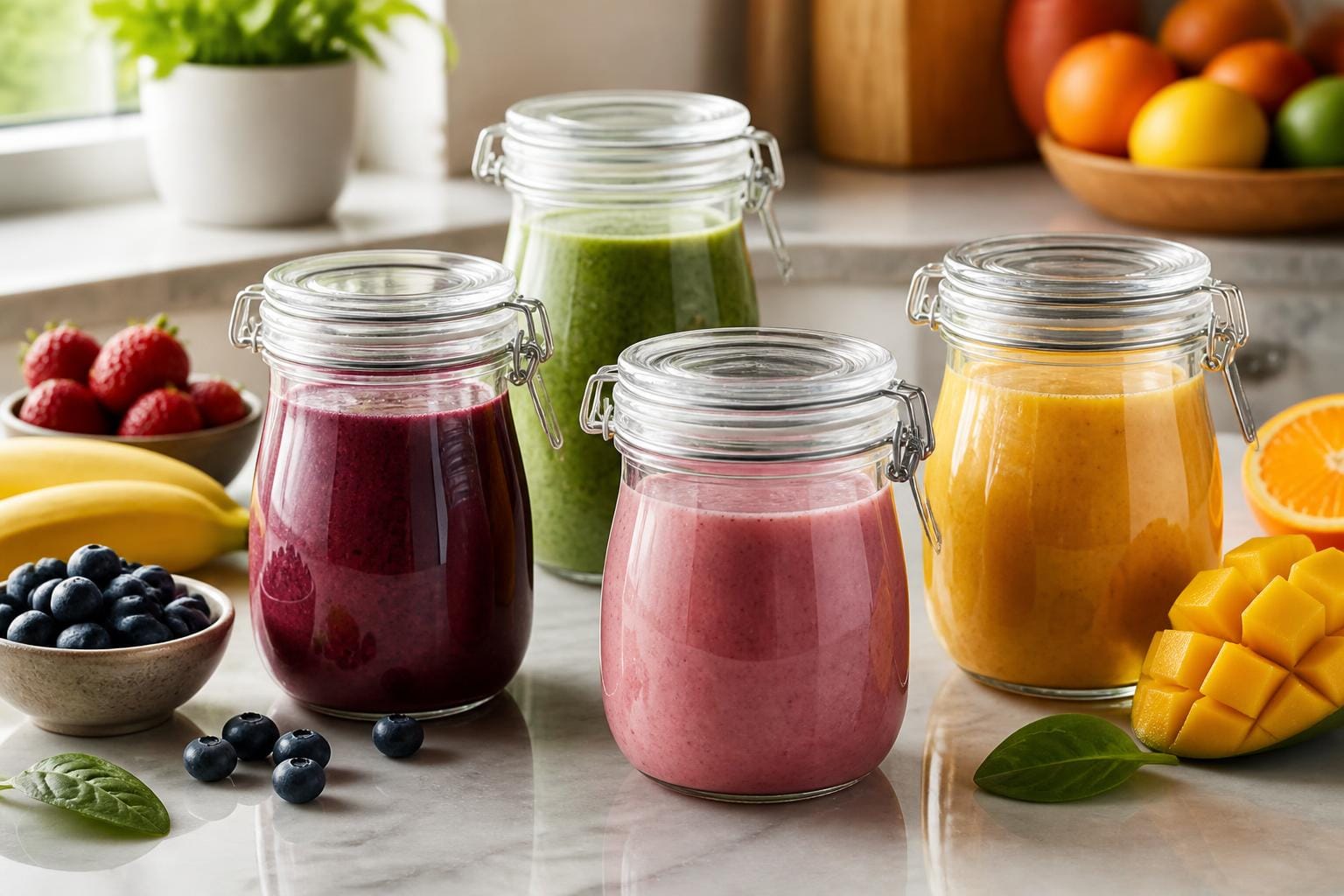
How Airtight Lid Seals Help Preserve Smoothies During Storage
📝 Disclaimer: The content and recipes on this site are for informational and educational purposes only and do not constitute medical or professional nutrition advice. Always consult with a qualified healthcare provider before making significant changes to your diet, especially if you have food allergies or pre-existing health conditions.
* This post may contain affiliate links. We may earn a commission from qualifying purchases made through these links at no extra cost to you.
* This site uses AI technology for content assistance and illustrative imagery. Images are for demonstration purposes and do not depict real people or events.

What an Airtight Lid Seal Means
An airtight lid seal describes a closure designed to limit the exchange of air between the inside of a container and its surrounding environment. In smoothie and beverage storage language, the phrase usually refers to the fit between a lid, gasket, cap, or locking mechanism and the container rim.
The term is primarily a storage and preparation descriptor, not a nutrition claim. It says something about how a container closes, rather than indicating anything about a beverage’s ingredients, macronutrient profile, or effect on body weight.
How the Term Is Used
Product descriptions, kitchen discussions, and beverage-storage notes may use “airtight” to distinguish a tightly closed container from one with a loose cover or simple splash-resistant top. The wording can suggest reduced air movement, limited leakage, or greater containment during ordinary handling.
“Airtight” is often used as practical shorthand rather than as a laboratory statement. The actual closure can vary according to the container design, lid material, seal condition, and how securely the parts fit together. The phrase therefore works best as a broad product-form or household-context label.
Relevance to Smoothies and Beverages
Smoothies and other blended drinks are fluid food formats that may contain suspended fruit, vegetable, dairy, plant-based, or seed components. An airtight-style closure can be relevant to portability and containment because liquid formats may shift, separate, or move when a container is carried.
The seal itself does not change the beverage’s flavor, texture, color, or nutrient categories. It may influence how exposed the contents are to surrounding air, but the phrase alone does not establish a storage duration, freshness guarantee, or food-safety outcome. Those details depend on the container, handling conditions, and the beverage itself.
Neutral Terminology Checkpoints
- Airtight: A general description of limited air exchange through a closed container.
- Lid seal: The contact area or component that helps close the space between the lid and container.
- Leak resistance: A related but distinct idea describing how well a container limits liquid escape during handling.
- Beverage format: A liquid or semi-liquid food form, including blended drinks, rather than a specific recipe or dietary category.
- Product wording: A descriptive label whose practical meaning can vary across container designs and manufacturers.
- Storage context: A household setting involving containment and handling, not a nutrition, weight-management, or health claim.
What the Phrase Does Not Establish
An airtight lid seal does not indicate that a beverage is low in carbohydrate, high in protein, suitable for a particular eating pattern, or connected to a body-composition outcome. It also does not establish that a container prevents all air movement, eliminates contamination risk, or preserves a drink for a particular length of time.
The phrase belongs to preparation and storage terminology. Reading it in that context keeps the focus on closure design, containment, and ordinary beverage handling rather than extending the wording into unsupported claims about nutrition or health.


Comments are closed.