
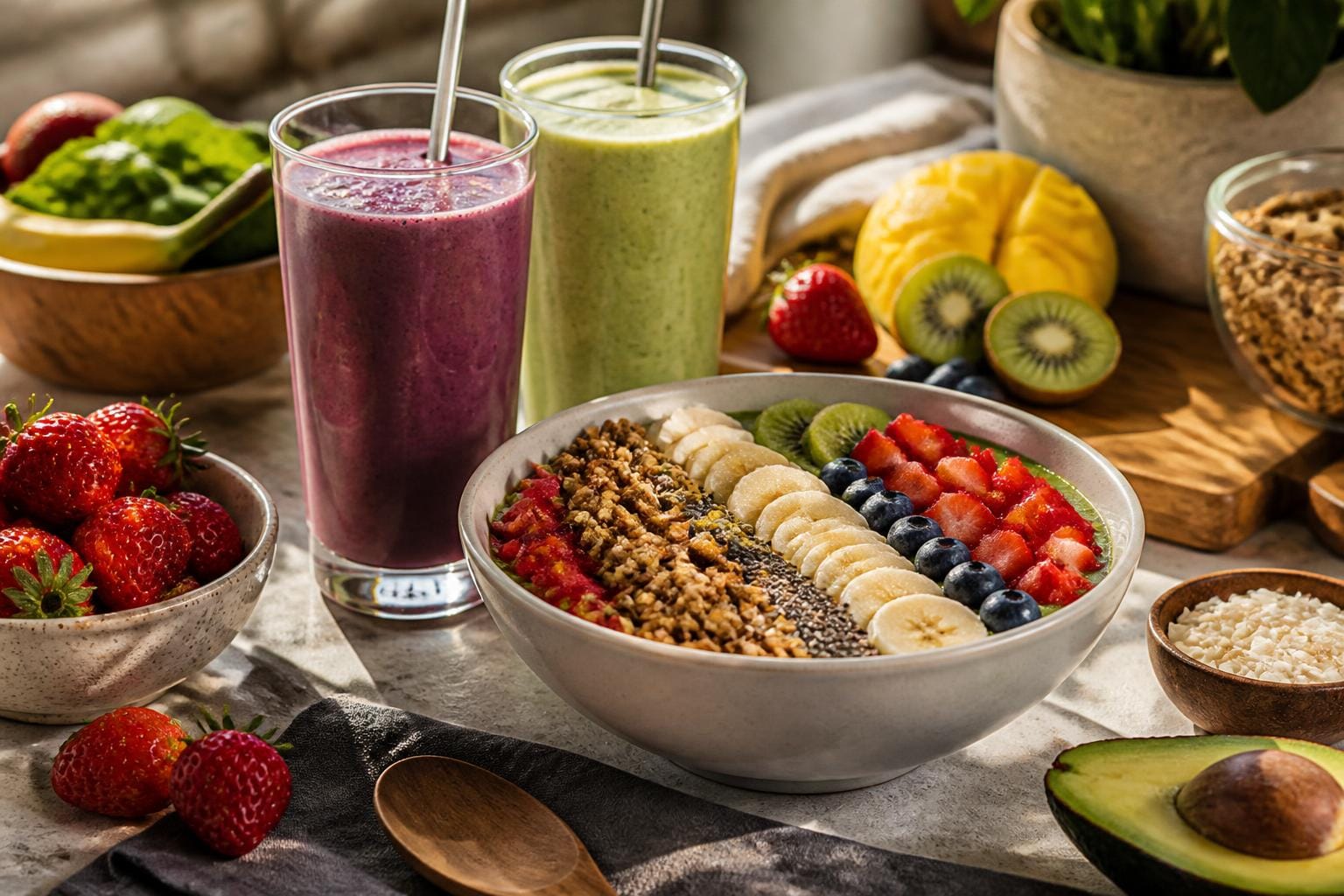
Granola Bowls: Understanding Texture, Composition, and Presentation
📝 Disclaimer: The content and recipes on this site are for informational and educational purposes only and do not constitute medical or professional nutrition advice. Always consult with a qualified healthcare provider before making significant changes to your diet, especially if you have food allergies or pre-existing health conditions.
* This post may contain affiliate links. We may earn a commission from qualifying purchases made through these links at no extra cost to you.
* This site uses AI technology for content assistance and illustrative imagery. Images are for demonstration purposes and do not depict real people or events.

Understanding a Granola Bowl as a Food Format
A granola bowl is a serving format built around granola placed in a bowl, often alongside other foods such as fruit, yogurt, milk, or plant-based alternatives. The phrase describes an arrangement and eating context rather than a standardized recipe, nutrition profile, or health outcome.
Granola can vary widely in ingredients and texture. Some versions contain rolled grains, seeds, nuts, dried fruit, sweeteners, or added flavorings, while others use a simpler grain-based composition. The word alone does not establish a fixed amount of carbohydrate, fat, protein, fiber, sugar, or energy.
Texture, Flavor, and Composition
The sensory experience commonly associated with a granola bowl includes crunch, chewiness, and contrast between dry and moist components. Granola may have toasted, nutty, spiced, fruity, or mildly sweet notes, depending on its ingredients and preparation. Moisture from yogurt, milk, or fruit can soften the mixture over time.
Its composition is product-dependent. A label may list grains as a primary ingredient, with seeds, nuts, oils, syrups, dried fruit, or flavorings contributing to taste and texture. These differences can affect how the food looks, feels, and tastes without making one version universally superior.
A bowl format can also be used in different cultural and commercial settings. It may appear as a breakfast-style food, a snack-format serving, or a visually layered menu item. Those uses describe context rather than a prescribed eating pattern.
How the Term Appears in Nutrition and Diet Language
Granola bowls sometimes appear in conversations about balanced eating, convenience, or lifestyle presentation. Such descriptions can carry implied nutrition claims, yet the term itself does not confirm a particular nutrient balance or effect on body weight, appetite, metabolism, or health.
Portion language may also appear around bowl-based foods, but a serving description is not automatically a personal target. Household bowls differ in size, and ingredients vary substantially between homemade, restaurant, and packaged versions. A neutral reading treats the phrase as a format label unless more specific information is provided.
Nutrition interpretation depends on the ingredient list, nutrition label, preparation style, and accompanying foods. Broad assumptions based only on the word “granola” can overlook differences in grain content, added sugars, oils, seeds, nuts, and dried fruit.
Neutral Observations About the Format
- Granola: A grain-based mixture that may include seeds, nuts, dried fruit, oils, sweeteners, or spices.
- Bowl: An open serving vessel that allows ingredients to be combined, layered, or eaten separately.
- Texture: Often associated with crisp or crunchy pieces, though moisture can change the texture during serving.
- Flavor: May range from toasted and nutty to fruity, spiced, or sweet, depending on formulation.
- Label meaning: The phrase does not establish a fixed calorie, macronutrient, sugar, or fiber profile.
- Context: It can refer to a breakfast-style serving, snack format, menu description, or general food presentation.
- Claim caution: Statements about weight, metabolism, fullness, or health require evidence beyond the format name.
Reading Granola Bowl Language Clearly
A granola bowl is best understood as a flexible food-format term rather than a complete nutrition category. The visible ingredients, product label, and serving context provide more information than the phrase alone. This distinction helps separate sensory and presentation language from claims about biological effects or body changes.
Neutral food literacy also allows room for ordinary variation. A granola bowl can differ in texture, sweetness, composition, and cultural use without needing to be assigned a moral label or a transformation-related meaning.

Comments are closed.